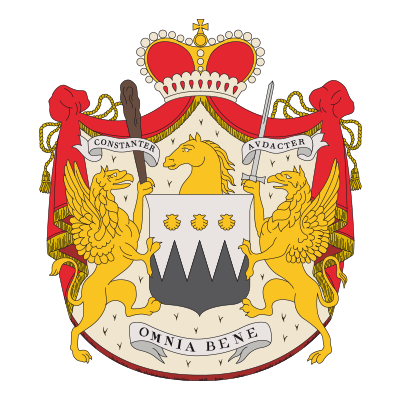

FIEFS HELD BY THE HOUSE OF RUFFO
- Acconia;
- Acerenza;
- Acerra;
- Alessano;
- Aliano;
- Altavilla;
- Altilia;
- Alviano;
- Amendolara;
- Anchorage of Calabria Citra and Ultra from Pentidattilo to Roseto;
- Anoia;
- Ardicino;
- Arisca;
- Artiscolo;
- Atella;
- Atina;
- Badia;
- Badolato;
- Bagaladi;
- Balbano;
- Balizio;
- Barbato;
- Barbeno;
- Bazzano;
- Bianco;
- Bisignano;
- Bombiscuro;
- Borrello;
- Bovalino;
- Bovo;
- Brancaleone;
- Briatico;
- Brizzino;
- Bruzzano;
- Buccalirio;
- Buda;
- Buttarubbia;
- Cabuca;
- Calanna;
- Calenda;
- Calimera;
- Calogero;
- Calvaria;
- Calveto;
- Camereone;
- Camione;
- Campana;
- Campomaddalena;
- Campora;
- Candolfuri;
- Cannaruto;
- Cannetello;
- Capriglia;
- Caprile;
- Cariati;
- Carizzani;
- Caroniti;
- Casabona;
- Casanova;
- Casoleto;
- Cassachiusa;
- Cassano;
- Castagneto;
- Castelfranco;
- Castelgrande;
- Castellammare;
- Castello;
- Castelchiano;
- Castelvecchio;
- Castelvetere;
- Castelzappiti;
- Castromainero;
- Catone;
- Cave;
- Calopezzato;
- Condejanni;
- Contursi;
- Corbazio;
- Corigliano;
- Corio;
- Corleto;
- Cortale;
- Costuri;
- Cotronei;
- Crepocore;
- Cricigliano;
- Cropalati;
- Crosia;
- Crucoli;
- Cropani;
- Cuccorino;
- Cursio;
- Cutro;
- Dragoni;
- Dugenta;
- Felitto;
- Ferolito;
- Filocaso;
- Foscasangervasio;
- Frascineto;
- Friano;
- Fuscaldo;
- Gallicianò;
- Gallipoli;
- Gamiora;
- Genzano;
- Gerenzia;
- Giampilieri;
- Grimaldo;
- Grotte;
- Gratteria;
- Grugliano;
- Guiltissano;
- Illicito;
- Ioppolo;
- Isola;
- Laganadi;
- Lamissa;
- Lavonio;
- Lebianco;
- Lettere;
- Longano;
- Logastrina;
- Longobucco;
- Luperzano;
- Lupino;
- Maina;
- Mainardo;
- Marino;
- Martorano;
- Matera;
- Matina;
- Mazzacallo;
- Melicucco;
- Mellosa;
- Mignano;
- Milanese;
- Mirto;
- Misiano;
- Misuraca;
- Mongiolino;
- Motebello;
- Motelattario;
- Montello;
- Monteserico;
- Mottabaldiera;
- Mottacalada;
- Mottacastellaccio;
- Mottanomara;
- Mottarossa;
- Nardò;
- Niceforo;
- Nisita;
- Oppido;
- Orosia;
- Otranto;
- Palazzo;
- Palma;
- Pallacorio;
- Pantona;
- Passacatona;
- Pellaro;
- Perticaro;
- Petracina;
- Pietracicora;
- Pietrapaola;
- Plancanico;
- Policastro;
- Policoro;
- Portunno;
- Preitoni;
- Procopio;
- Quiterno;
- Rabione;
- Raddino;
- Rapone;
- Reddano;
- Reggio;
- Riparossa;
- Roccabernarda;
- Roccadarce;
- Roccaforte;
- Roccasanmauro;
- Roccastelli;
- Roccella;
- Rocchetta;
- Roghudi;
- Rosali;
- Rosarno;
- Rossano;
- Ruffano;
- Saccanio;
- Salice;
- Salvatello;
- San Basilio;
- San Giovanni Maggiore;
- San Giovanni Monaco;
- San Giuseppe;
- San Lorenzo;
- San Lucido;
- San Marco;
- San Maurello;
- San Pantaleone;
- San Senatore;
- Sant’Angelo;
- Santa Severina;
- Santa Sofia;
- Sant’Onofrio;
- Saracena;
- Sarno;
- Satriano;
- Scala;
- Schiavo;
- Scigliano;
- Scilla;
- Scillone;
- Seminara;
- Sesta;
- Sillaro;
- Simmari;
- Solano;
- Starza delle Cese;
- Strongoli;
- Tacina;
- Tarsia;
- Taverna;
- Terlizzi;
- Terracciano;
- Terraccio;
- Terranova;
- Tignano;
- Triolo;
- Torremarina;
- Tropea and its Casali;
- Ugento;
- Umbriatico;
- Valbisente;
- Vernusio;
- Verzine;
- Vico di Pantano;
- Zagarise.
Updates
- Guardia Lombarda;
- Minzillicar and
- Chabucas, these latter two fiefs, located in the territory of Sciacca, were granted by King Roger II, in 1146, to Gervasio Ruffo di Calabria;
- Scilla;
- Sinopoli;
- Bagnara;
- Nicotera;
- Santa Cristina;
- Aquaro;
- Alife;
- Altomonte;
- Belcastro;
- Cotrone;
- Catanzaro;
- Corigliano;
- Gerace;
- Molino;
- Molise;
- Montalto;
- Nicosia;
- Nicotera;
- Paola;
- Ruvo;
- Sant’Eufemia;
- Crispano;
- Guardia Perticara;
- Guidomandri;
- Licodia;
- Monferrante;
- Panaja;
- Papanice;
- Pentidattilo;
- Artalia;
- Bagnara;
- Baranello;
- Calvello;
- Grottalombarda;
- Mileto;
- Tufara;
- Castelcicala;
- Floresta;
- Fiumara di Muro;
- Melito;
- Morra;
- Motta;
- Palazzolo;
- Sant’Antimo;
- Sant’Onofrio;
- Scaletta;
- Sperlinga;
- Spinoso;
- Squillace;
- Sulmona;
- Amendolea;
- Francavilla.
NOBLE TITLES
Viscounty
Francavilla
Counties
Aquaro; Alife; Altomonte; Belcastro; Borrello*; Catanzaro (1252); Corigliano; Gerace (1449); Molino; Molise; Montalto; Nicosia; Nicotera*; Paola; Ruvo (1345); Sant’Eufemia; Sinopoli (1335)*; Terlizzi (1345); Terranova.
Marquisates
Calanna*; Cotrone (1390); Crispano; Guardia Perticara; Guidomandri; Licodia (1622); Monferrante; Panaja; Papanice (1390); Pentidattilo.
Duchies
Artalia; Bagnara (1603); Baranello; Calvello; Guardia Lombarda*; Grottalombarda; Mileto; Ruffo; Santa Cristina (1603)*; Tufara.
Principalities
Castelcicala; Floresta (1679); Fiumara di Muro; Melito; Morra; Motta San Giovanni; Palazzolo (1662); Ruffo (1929); Sant’Antimo; Sant’Onofrio; Scaletta (1673); Scilla (1572); Sperlinga (1741); Spinoso; Squillace; Sulmona.
The Ruffo Arms
The arms of the House of Ruffo are extremely ancient. The first documented notices of their use by knights of the House date back to the time of (8) Pietro I, that is, to the thirteenth century, but they are certainly older.
Della Marra, drawing the information from the chronicle of the Anonymous writer of the age of Manfred, reports that the people of Messina received (8) Pietro I, Count of Catanzaro, on his return to the city, waving black-and-white banners, which were and still are the colors of the House of Ruffo.
In heraldic language, the Ruffo arms (arme being synonymous with shield) are described as follows:
“Diviso inchiavato d’argento e di nero. Cimiero: testa e collo di cavallo nascente di nero.”
(Per pall inverted, argent and sable. Crest: the head and neck of a horse issuant, sable.)
The motto adopted by the various lines is not unique. For the Ruffo di Calabria of Sinopoli-Scilla: Omnia bene; for the Bonneval-La Fare line: Nobilissima et vetustissima; for the Bagnara line: Vis unita fortior; for the Castelcicala line: Nunquam retrorsum; for the Scaletta line: Omnia bene; for the Floresta line: Omnia bene.
In my view, what matters is not so much the formal heraldic definitions, which today easily create confusion, but rather making clear what one can “read” in the shield bearing the Ruffo arms.
The common arms of all the lines of this House are those reproduced here, if one removes from the shield the three scallop shells and the cartouche below, which distinguish the Ruffo di Calabria of Sinopoli-Scilla from the other lines.
To justify my claim that heraldic language may create confusion, I shall attempt a practical demonstration:
“First, the colors and metals of the shield and figures must be expressed in the description of the arms; second, the quality of the figures must be expressed and one figure not confused with another; third, the number of the figures must be expressed, which often serves to distinguish families; fourth, the position of the figures must be expressed in the description of the arms, since this too serves to distinguish many families. To blazon means, therefore, to describe the arms, the shield, its tinctures, its figures, and accessories, in their positions, their number, with their attributes, and all this with the proper terms of heraldic language and in observance of the rules pertaining to blazon.”
It is a specialized language, difficult to understand, which I myself scarcely speak, and only stammer.
To “read” the arms of the House of Ruffo, it is enough to know a few things. The two colors, silver (upper half of the shield) and black (lower half), in heraldry are called respectively metal and tincture. It is enough to observe that the tincture black is absolutely rare in Italian heraldry to suggest the plausible hypothesis that the Ruffo arms may date back as far as the Roman period.
The scallop shells arranged in fess — which, as they are represented on the Ruffo shield, are called orecchiate in heraldic language — are believed to have been introduced into coats of arms during the Crusades, and they symbolize precisely the participation of knights of the House in the first three Crusades.
The graphic representation of the shell is important, since it is the symbol of pilgrims: if represented without ears, it is said to be of St Michael; if represented with the ears showing the inner part, it is said to be of St James of Compostela, that is, Santiago de Compostela.
The shells were added in 1253, when (1) Fulcone Ruffo, by marrying Margherita di Pavia, brought back into his House — after almost a hundred years — the ancient fief of Sinopoli. It was in fact the knightly lords of Sinopoli who had taken part in the first three Crusades.
This served not only to distinguish at first glance the House of Sinopoli from the senior line of the Counts of Catanzaro (which bore the same arms, but without the shells), but also to affirm the antiquity and prestige of the cadet branch, now once again lords of the ancient fief of Sinopoli.
At that time the Count of Catanzaro was Pietro I, grandfather of Fulcone, who evidently approved the choice made by his grandson. In the Ruffo family it has always been believed, though without documentary proof but by oral tradition, that Fulcone merely adopted the arms with the three shells of the ancient lords of Sinopoli, who had died out during the reign of William I, called the Bad.
The crest is common to all the lines and branches of the House of Ruffo, although over the centuries it has been represented in two different ways: either as the head and neck of a horse, or as a horse issuant, that is, head, neck, and the two forelegs, in other words the foal as it appears at the moment of birth.
This latter is the correct representation of the crest, corresponding to the original and carrying a precise meaning. The other is a deformation of the first, adopted over time because it is easier to execute graphically.
The crest was added to the Ruffo arms during the fourth decade of the thirteenth century and must have obtained the approval of Frederick II, who, as is well known, was not very tolerant of initiatives taken by his vassals.
And here, finally, is the origin and reason for the crest: during the decade 1240–1250, Giordano Ruffo (who does not appear in the genealogical tree reproduced above), head of the imperial stables and younger son of (8) Pietro I, composed a treatise on veterinary medicine, which greatly pleased the Emperor, himself a scholar of the natural sciences.
In that treatise, for the first time, not only was a scientific basis and content given to veterinary medicine, but there was also described the technique by which to shoe a horse’s hooves. This was an acquisition of enormous importance, with positive consequences both military and in terms of greater security and speed in communication and transport; indeed, it “gave life to a new horse, capable of running without injury on any terrain.”
In times when, after a battle or after a long journey over hard ground, many horses became unusable because of the “splitting” of the hoof, horseshoeing assumed the dimensions of an absolutely extraordinary and innovative event.
To celebrate so great an achievement, the Emperor granted the Ruffo the right to add to their arms a crest which represented precisely a horse issuant.
Below I reproduce the arms of the Ruffo, Princes of Scaletta, whose crest is a horse issuant (the legs are barely visible through the fleurs-de-lis of the coronet). In this connection — as a further demonstration of the difficulty of using heraldic language — I point out the error of having depicted it without the four visible pearls (eight in all, alternating with the eight fleurs-de-lis), as is required for the coronet of a Prince. The reproduced coronet is that of a Duke, but in that case it should not be closed by the purple velvet cap of the mantle in the manner of a toque surmounted by a golden tassel.
A further demonstration of how difficult heraldic language is to use.
At the close of the second millennium, the contemporary Ruffo wished to commemorate the thousand years of history of their House by minting a medal to celebrate so great a longevity. Among the many sculptors who submitted proposals, the sketch by Professor Rosario La Seta was chosen, a sculptor of great artistic sensitivity, a Calabrian from Bruzzano Zeffirio, a district long held in fief by the Ruffo.
The medal is reproduced below: on the obverse, (8) Pietro I; on the reverse, the oldest seal of the House, and on the border the mottos used by the Ruffo.